Las Cruces Yard Guide
25 Plants That Thrive in Las Cruces (Zone 8b): A New Mexico Desert Plants Guide
Not every “drought-tolerant” plant from a big-box store survives a Las Cruces June, alkaline soil and three watering days a week. These 25 do. We plant them in local yards every season, and most appear on NMSU’s low water-use plant lists for the Southwest.
Updated September 2026. Las Cruces is in USDA Hardiness Zone 8b on the 2023 USDA map. Organ and higher areas run a little colder.
Quick answer
What are the best plants for a Las Cruces yard?
The most reliable Las Cruces plants are desert willow and chitalpa for shade, Texas sage, Apache plume and autumn sage for shrubs, red yucca, Parry’s agave and sotol for structure, blackfoot daisy and desert marigold for color, and blue grama for grass.
The rule that matters more than any plant: group plants by water need on separate drip zones, and plant in fall or early spring so roots grow before summer.
What “thrive in Las Cruces” means
Trees
What are the best shade trees for Las Cruces?
Desert willow and chitalpa are the top shade trees for Las Cruces yards because they handle heat, alkaline soil and low water once established. Desert willow is native with orchid-like summer flowers, and chitalpa grows a little larger with fuller shade.
|
Plant |
Mature size |
Water once established |
Why it works here |
|---|---|---|---|
|
Desert willow (Chilopsis linearis) |
15 to 25 ft |
Low |
Native; orchid-like summer flowers; fast, light shade |
|
Chitalpa (× Chitalpa tashkentensis) |
20 to 30 ft |
Low to moderate |
Desert willow hybrid with fuller shade and pink flowers |
|
Thornless honey mesquite (Prosopis glandulosa) |
20 to 30 ft |
Low |
Native; tough in wind and caliche; filtered shade |
|
Desert Museum palo verde (Parkinsonia hybrid) |
15 to 25 ft |
Low |
Green bark, yellow spring flowers, thornless |
|
Vitex / chaste tree (Vitex agnus-castus) |
10 to 20 ft |
Low to moderate |
Purple summer spikes; loved by bees |
Plant trees at least 10 to 15 feet from the house and keep them off septic fields. Deep, wide holes through caliche make the biggest difference.
Shrubs
Which shrubs handle the Las Cruces heat?
Texas sage, Apache plume, autumn sage, fourwing saltbush, damianita and other desert shrubs handle Las Cruces heat, reflected light off walls and alkaline soil on low water once established. Texas sage blooms purple after rain, and Apache plume is a tough native.
|
Plant |
Mature size |
Water once established |
Why it works here |
|---|---|---|---|
|
Texas sage (Leucophyllum frutescens) |
4 to 6 ft |
Low |
Purple blooms after rain; takes reflected heat |
|
Apache plume (Fallugia paradoxa) |
3 to 8 ft |
Low |
Native; white flowers and feathery seed heads |
|
Autumn sage (Salvia greggii) |
2 to 3 ft |
Low |
Red, pink or coral flowers spring to frost; hummingbirds |
|
Damianita (Chrysactinia mexicana) |
1 to 2 ft |
Low |
Evergreen mound with yellow daisies |
|
Creosote bush (Larrea tridentata) |
3 to 6 ft |
Very low |
The smell of desert rain; almost no care |
|
Yellow bird of paradise (Erythrostemon gilliesii) |
5 to 8 ft |
Low |
Showy yellow and red summer flowers |
|
Fourwing saltbush (Atriplex canescens) |
2 to 5 ft |
Low |
Native; great for windbreaks and sandy soil |
Accents
What accent plants add structure to a desert yard?
Red yucca, Parry’s agave, sotol and other spiky desert plants give Las Cruces yards year-round structure on very little water. Red yucca has coral flower spikes from spring to fall, and Parry’s agave is a cold-hardy rosette that takes winter freezes.
|
Plant |
Mature size |
Water once established |
Why it works here |
|---|---|---|---|
|
Red yucca (Hesperaloe parviflora) |
3 ft, spikes to 5 ft |
Very low |
Coral flower spikes spring to fall; soft leaves |
|
Parry’s agave (Agave parryi) |
2 to 3 ft |
Very low |
Cold-hardy rosette; blooms once at maturity |
|
Wheeler sotol (Dasylirion wheeleri) |
3 to 5 ft |
Very low |
Native; silver-blue fountain of leaves |
|
Beargrass (Nolina microcarpa) |
3 to 4 ft |
Very low |
Native; grassy clumps, no spines |
|
Soaptree yucca (Yucca elata) |
6 to 15 ft |
Very low |
Native; tall trunks and white flower stalks |
Keep spiny agaves and yuccas 3 feet or more from walkways, play areas and pool decks.
Color
What flowers and groundcovers grow well in Las Cruces?
Blackfoot daisy and desert marigold are native flowers that bloom most of the year in rock beds, and penstemon, verbena, damianita and other low plants add color and cover on little water. Most reseed or spread slowly without becoming weedy.
|
Plant |
Mature size |
Water once established |
Why it works here |
|---|---|---|---|
|
Blackfoot daisy (Melampodium leucanthum) |
1 ft |
Low |
Native; white daisies spring to fall in rock beds |
|
Desert marigold (Baileya multiradiata) |
1 ft |
Very low |
Native; bright yellow almost all year; reseeds |
|
Parry’s penstemon (Penstemon parryi) |
2 to 3 ft |
Low |
Pink spring spikes; hummingbirds |
|
Chocolate flower (Berlandiera lyrata) |
1 to 2 ft |
Low |
Native; yellow flowers that smell like chocolate in the morning |
|
Angelita daisy (Tetraneuris acaulis) |
1 ft |
Low |
Native; tidy yellow mounds for borders |
|
Lantana (Lantana hybrids) |
1 to 3 ft |
Low to moderate |
Nonstop summer color; may die back in a cold winter |
Grasses
Which grasses grow well in Las Cruces?
Blue grama, New Mexico’s state grass, and deer grass are two of the best grasses for Las Cruces. Blue grama stays short and can serve as a no-mow lawn, while deer grass forms big, fine-textured clumps that soften rock beds and borders.
|
Plant |
Mature size |
Water once established |
Why it works here |
|---|---|---|---|
|
Blue grama (Bouteloua gracilis) |
1 to 2 ft |
Very low |
New Mexico’s state grass; eyelash seed heads; can be a no-mow lawn |
|
Deer grass (Muhlenbergia rigens) |
3 to 4 ft |
Low |
Big, fine-textured clumps; softens rock yards |
Blue grama can replace part of a Bermuda lawn for a native, low-water meadow look. It won’t take heavy foot traffic like Bermuda, so keep it to areas you look at more than walk on.
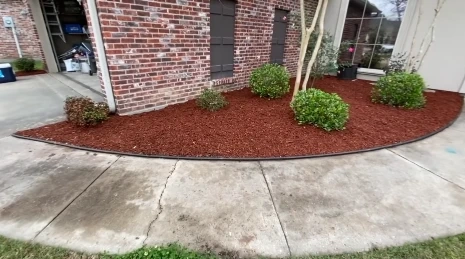
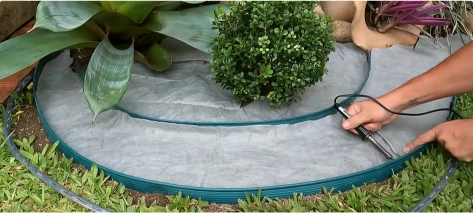
Planting beds with defined edges keep desert plants looking cared for.
Avoid
Which plants should you avoid in a Las Cruces yard?
Skip Russian olive, saltcedar, Siberian elm and tree of heaven, all Class C noxious weeds in New Mexico that spread aggressively, plus crimson fountaingrass and pampas grass, which are on the state watch list. Pampas grass is also sharp-edged and a fire risk near homes.
|
Plant |
Why to avoid it |
|---|---|
|
Russian olive |
Class C noxious weed in New Mexico; spreads along ditches and the river |
|
Saltcedar (tamarisk) |
Class C noxious weed; invades waterways and uses huge amounts of water |
|
Class C noxious weed; seeds everywhere, weak limbs, root suckers in rock beds |
|
|
Tree of heaven |
Class C noxious weed; aggressive root suckers |
|
Crimson fountaingrass |
On New Mexico’s noxious weed watch list; spreads by seed |
|
Pampas grass |
On the watch list; huge, sharp-edged and a fire risk |
Source: New Mexico Department of Agriculture, New Mexico Noxious Weed List (2020). Class C species are widespread; management is decided locally.
Planting tips
How do you plant desert plants so they survive the first summer?
Plant in October, November or early spring, dig holes twice as wide as the pot and break through caliche, backfill with native soil instead of rich mix, set drip emitters at the root ball and water deeply until roots establish, then taper off.
1
Plant in fall or early spring
October and November are best; roots grow all winter before the heat.
2
Dig wide, not deep
Twice as wide as the pot, and break through caliche so water can drain.
3
Skip the rich soil
Most desert plants do best in native soil; heavy amendments hold too much water.
4
Drip on your days
Two to three waterings a week the first summer, then taper off.
5
Group by water
Put thirsty and dry-loving plants on separate drip zones.
Las Cruces plant FAQs
Ready for a yard that thrives here?
We plant low-water Las Cruces landscapes with the right plants in the right spots, on drip set to your watering days. Free, written estimate.
Las Cruces Landscaping Group
1921 Santa Ines Drive, Las Cruces, NM 88011
(575) 270-0676. Mon to Sat, 7 a.m. to 7 p.m.
Request a Free Estimate
Takes under a minute. We’ll call you back today.