Las Cruces Yard Guide
Hummingbird and Pollinator Gardens in Las Cruces
Southern New Mexico is hummingbird country. Black-chinned hummingbirds nest here, and rufous, broad-tailed and calliope hummingbirds pass through on migration. Add native bees and butterflies, and a small bed of the right low-water plants can stay busy from spring into fall. Here’s what to plant and how to keep them coming.
Updated September 2026. Plant picks are low-water species suited to Las Cruces.
Quick answer
How do I attract hummingbirds in Las Cruces?
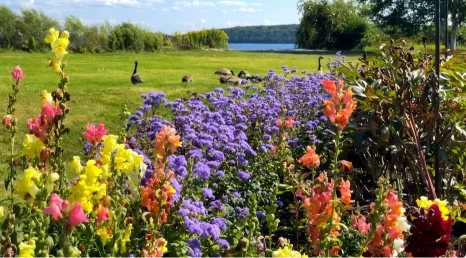
Plant tubular, red and orange flowers that bloom in sequence, such as penstemon, autumn sage, red yucca, desert honeysuckle, agastache and desert willow. Add shrubs or trees for perching and nesting, a shallow water source, and a clean feeder of one part sugar to four parts water.
Plant in groups of three or more of each plant so birds see a big patch of color from the air.
Hummingbirds you may see
|
Species |
When |
|---|---|
|
Black-chinned |
Spring through summer; nests here |
|
Rufous |
Late summer migration |
|
Broad-tailed |
Spring and late-summer migration |
|
Calliope |
Late summer migration |
Plants
What are the best hummingbird plants for Las Cruces?
The most reliable low-water hummingbird plants here are penstemons in spring, red yucca and autumn sage from spring to fall, desert willow and desert honeysuckle in summer, and agastache and ocotillo for extra color. Choose a mix so something is blooming from March into October.
|
Plant |
Bloom time |
Water |
|---|---|---|
|
Penstemon (Parry’s, firecracker) |
Spring |
Low |
|
Red yucca |
Late spring to fall |
Low |
|
Autumn sage (Salvia greggii) |
Spring to fall |
Low |
|
Desert honeysuckle |
Summer to fall |
Low |
|
Desert willow |
Late spring to fall |
Low |
|
Agastache (hummingbird mint) |
Summer to fall |
Low to moderate |
|
Ocotillo |
Spring |
Very low |
More options in plants that thrive in Las Cruces.
Bees and butterflies
Which plants attract bees and butterflies in Las Cruces?
Native wildflowers and shrubs feed the most pollinators: desert marigold, globemallow, blackfoot daisy, blanketflower, milkweed, Apache plume and Texas sage. Open, flat flowers suit bees and butterflies, while tubular flowers suit hummingbirds, so mix both shapes in the same bed.
For native bees
Globemallow, desert marigold, blackfoot daisy and Apache plume.
For butterflies
Milkweed for monarch caterpillars, plus blanketflower and zinnias for nectar.
For long bloom
Texas sage flushes after rain; damianita and desert marigold bloom for months.
Design it
How do I design a pollinator garden in a desert yard?
Pick a sunny spot you can see from a window, plant groups of three to five of each flower, plan for bloom from spring to fall, add a shallow water dish with stones, leave some bare ground for ground-nesting bees, and water everything with drip.
1
Choose the spot
Full sun, visible from the house or patio.
2
Plan the bloom
Spring, summer and fall bloomers in the same bed.
3
Plant in groups
Clusters of three to five read as one big target.
4
Add water
A shallow dish or dripper with stones for landing.
5
Leave shelter
Shrubs for perching and some bare ground for native bees.
6
Drip, not spray
Low-flow drip keeps flowers going through summer.
Feeders
How should I care for a hummingbird feeder in Las Cruces?
Mix one part white sugar to four parts water, with no red dye or honey. In summer heat, clean and refill the feeder every two to three days, since the mix spoils fast. Hang it in partial shade near shrubs.
What mix?
One part plain white sugar to four parts water. No dye, honey or sweeteners.
How often?
Every 2 to 3 days in summer heat; up to weekly in cool weather.
Where?
Partial shade, near cover, away from windows or with window markers.
Keep it safe
How do I keep a pollinator garden healthy without harming bees?
Avoid broad-spectrum insecticides on flowering plants, and if a pest must be treated, spot-treat in the evening when bees aren’t active. Tolerate some leaf damage, since caterpillars become butterflies. Clean feeders often, remove spent stalks in late winter, and keep drip lines working.
Planning a whole bed? See xeriscaping in Las Cruces.
Related guides and services
Hummingbird and pollinator FAQs
Want a yard that buzzes with life?
We design low-water pollinator and hummingbird beds that bloom from spring into fall, on drip so they stay colorful through summer. Free, written estimate.
Las Cruces Landscaping Group
1921 Santa Ines Drive, Las Cruces, NM 88011
(575) 270-0676. Mon to Sat, 7 a.m. to 7 p.m.
Request a Free Estimate
Takes under a minute. We’ll call you back today.