Las Cruces Yard Guide
Drip vs. Sprinklers in Las Cruces (and Are Smart Controllers Worth It?)
Spray heads misting into the wind at 6 a.m., water running down the gutter, shrubs dying on a drip line nobody’s checked in years. The right irrigation setup saves plants, water and money in Las Cruces. Here’s when to use drip, when sprinklers still make sense, and what a smart controller really does.
Updated September 2026 using U.S. EPA WaterSense data.
Quick answer
Is drip or sprinkler better in Las Cruces?
For trees, shrubs and flower beds in Las Cruces, drip wins. EPA WaterSense says drip uses 20 to 50 percent less water than spray sprinklers because it waters at the roots instead of into dry, windy air. Sprinklers or rotors still make sense for lawns.
Pair either system with a WaterSense labeled smart controller, which the EPA says can cut irrigation water use by 15 to 30 percent, up to about 15,000 gallons a year for a typical home.
At a glance
|
Drip |
Spray sprinklers |
|
|---|---|---|
|
Best for |
Trees, shrubs, beds |
Lawns |
|
Water use |
20 to 50% less |
Baseline |
|
Wind loss |
Very low |
High on windy days |
|
Runoff |
Rare |
Common on slopes and clay |
|
Upkeep |
Check emitters and flush lines |
Adjust and replace heads |
Water savings from U.S. EPA WaterSense.
Why it matters here
Why does irrigation choice matter more in Las Cruces?
Spring wind and dry air carry spray away before it lands, the City allows only three watering days a week, and runoff into the street counts as water waste. Drip handles all three because it waters slowly at the roots, so every run actually reaches the plants.
Wind and dry air
Spring winds and low humidity carry spray away before it hits the ground. Drip doesn’t care about wind.
Three watering days
With only three days a week, every run has to count. Deep drip runs soak roots; short spray cycles often don’t.
Runoff counts as waste
Water running into the street is water waste under City rules. Drip and cycle-and-soak spray settings prevent it.
The EPA estimates as much as half of residential outdoor water can be wasted through inefficient irrigation.
Compare
How do drip, spray sprinklers and rotors compare?
Drip is best for trees, shrubs and beds, with very low wind loss and runoff. Spray sprinklers suit small lawns but lose the most water to wind and runoff. Rotors water larger lawns more slowly, with moderate wind loss and less runoff than spray heads.
|
Factor |
Drip irrigation |
Spray sprinklers |
Rotors |
|---|---|---|---|
|
Best use |
Trees, shrubs, beds, pots |
Small lawns and narrow strips |
Larger lawns |
|
How water is applied |
Slowly at the roots |
Fast spray over the area |
Slower rotating streams |
|
Wind loss |
Very low |
High |
Moderate |
|
Runoff risk |
Low |
High on slopes and clay |
Lower than spray |
|
Weeds |
Only wets plants |
Wets everything |
Wets everything |
|
Typical problems |
Clogged or missing emitters, chewed lines |
Broken heads, misaligned spray, overspray |
Stuck heads, uneven arcs |
Smart controllers
Are smart irrigation controllers worth it in Las Cruces?
Usually, yes. A WaterSense labeled smart controller adjusts watering to the weather or soil moisture, so it cuts back after monsoon storms and on cool days without you touching it. WaterSense says these controllers can cut irrigation water use by 15 to 30 percent.
|
Type |
How it works |
EPA savings figure |
|---|---|---|
|
Weather-based |
Adjusts run times using local weather data |
15 to 30% less irrigation water |
|
Soil moisture sensor |
Skips watering when soil is still moist |
About 30% less in a Florida field study |
Las Cruces setup tip: program the controller to your three address days (never Monday) and to finish before 10 a.m. from April to September. The smart features then trim run times inside those limits.
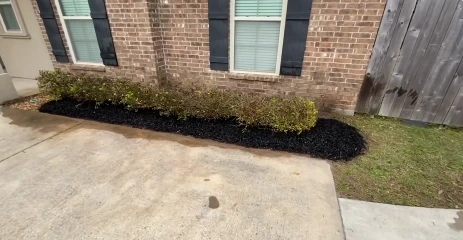
Shrubs on drip, zoned separately from the lawn, stay healthy on three watering days.
Converting
How do you convert sprinklers to drip?
Map the zones, keep lawn zones on efficient sprinklers or rotors, cap or convert spray heads in beds and add a filter and pressure regulator, lay drip tubing with emitters sized to each plant and more at tree drip lines, then program the controller to your watering days.
1
Map the zones
We find which zones water beds, trees and lawn, and which heads are wasting water.
2
Keep the lawn on spray
Lawn zones stay on efficient sprinklers or rotors, tuned to avoid overspray.
3
Convert bed zones
Spray heads in beds are capped or converted, with a filter and pressure regulator added.
4
Lay drip
Tubing and emitters sized to each plant, with more emitters out at the drip line of trees.
5
Program and test
Controller set to your City days, then every zone tested and adjusted.
Costs
How much do irrigation repairs and drip conversions cost in Las Cruces?
In Las Cruces a sprinkler repair call usually costs $137 to $422, a single broken head $65 to $90 installed, a valve repair $70 to $300, and converting bed zones to drip or installing a new drip system $1,500 to $4,500, depending on zones and plants.
|
Job |
Typical cost |
Notes |
|---|---|---|
|
Sprinkler repair call |
$137 to $422 |
Typical call about $278 |
|
Single broken head |
$65 to $90 installed |
|
|
Valve repair or replacement |
$70 to $300 |
|
|
Converting bed zones to drip, or a new drip system |
$1,500 to $4,500 |
Depends on zones and plants |
|
Smart controller upgrade |
Quoted with your system |
Works with most existing valves |
Ranges match our Sprinkler & Irrigation Repair page. Your quote is written and itemized before any work starts.
Drip and sprinkler FAQs
Want your irrigation to use less water?
We repair sprinklers, convert beds to drip and program controllers to your watering days. Free, written estimate.
Las Cruces Landscaping Group
1921 Santa Ines Drive, Las Cruces, NM 88011
(575) 270-0676. Mon to Sat, 7 a.m. to 7 p.m.
Request a Free Estimate
Takes under a minute. We’ll call you back today.