Las Cruces Yard Guide
Pet-Friendly Desert Yards in Las Cruces: A Dog Owner’s Guide
Goatheads in paws, rock too hot to walk on, a turf patch that smells by August and a dog digging under the wall. A Las Cruces yard can be great for dogs, but it takes a different plan than back east. Here’s how to pick surfaces, plants and a layout that work for pets and people.
Updated September 2026. Plant toxicity from the ASPCA; turf heat data from studies summarized by the Toxics Use Reduction Institute.

Quick answer
What makes a yard dog-friendly in Las Cruces?
A dog-friendly Las Cruces yard has shade over the areas dogs use, surfaces that don’t burn paws, no goatheads or spiny cactus where dogs run, no toxic plants like sago palm and oleander, and a dog run that drains so it doesn’t smell.
Most of that is layout, not money: put the shade, turf and water together, keep spiny plants behind a border, and fix goatheads before they fix you.
Las Cruces yard hazards for dogs
Surfaces
What is the best ground cover for dogs in the desert?
Shaded Bermuda grass stays coolest, pet-grade artificial turf with a draining base and pet infill is cleanest, and smooth 3/8-inch pea gravel or decomposed granite drain fast and cost less. In Las Cruces sun, shade over any surface matters as much as the surface itself.
|
Surface |
Paw comfort in summer |
Drainage and cleanup |
Notes |
|---|---|---|---|
|
Coolest in sun |
Absorbs, can get muddy |
Needs water on your 3 days; urine spots |
|
|
Pet-grade artificial turf |
Hot in sun unless shaded |
Drains through backing and base |
Use pet infill and a flushable base |
|
Pea gravel (smooth, 3/8 in) |
Warm, easy on paws |
Drains fast, rinse to clean |
Dogs may dig; edge it well |
|
Decomposed granite (DG) |
Warm; firm underfoot |
Drains; can track in |
Good for paths and dog runs |
|
3/4 in crushed rock |
Warm; sharper edges |
Drains fast |
Fine for beds, less comfortable for running |
|
Pavers and concrete |
Can get very hot in sun |
Hose off easily |
Shade it or skip it for dog areas |
Studies summarized by the Toxics Use Reduction Institute found synthetic turf averaging 35 to 42°F hotter than natural grass in direct sun. Shade and timing matter more than surface for summer paw safety.
Tip
The back-of-hand test
Hold the back of your hand on the surface for seven seconds. If it’s too hot for your hand, it’s too hot for paws. In Las Cruces summers, that’s most sunny surfaces by midday.
Myth vs. fact
“Artificial turf is the easy answer for dogs.”
Fact: turf is clean and green, but it gets hot in sun and can smell if the base doesn’t drain. It works best in shade, with pet infill, and hosed down regularly.
Plants
Which plants should you keep away from dogs?
Keep sago palm and oleander out of dog areas, since the ASPCA lists both as dangerous to dogs, and skip lantana, which is on the ASPCA toxic plant list. Cholla, prickly pear and sharp-tipped agave and yucca should sit behind borders where dogs can’t reach them.
|
Keep away from dogs |
Why |
|---|---|
|
Sago palm |
ASPCA: can cause liver damage and can be fatal to dogs and cats |
|
Oleander |
ASPCA: can cause life-threatening heart problems |
|
Cholla and prickly pear |
Spines and joints that stick to fur and paws |
|
Agave and yucca with sharp tips |
Eye and skin injuries; keep them behind borders |
|
Lantana |
On the ASPCA toxic plant list; skip it in dog areas |
Source: ASPCA. If your pet eats a plant you’re unsure about, call your vet or the ASPCA Animal Poison Control Center at (888) 426-4435.
Good choices near dog areas include soft, tough plants like Texas sage, Apache plume, autumn sage, desert willow and native grasses such as blue grama and deer grass. Place spiny accents at the back of beds, behind a border or a low wall.
Dog run
How do you build a dog run in Las Cruces?
Pick a shady spot on the north or east side or under a shade sail, remove 3 to 4 inches of soil and slope it to drain away from the house, build a compacted draining base, top it with pet turf or smooth pea gravel, and add water and shade.
2
Dig and grade
Remove 3 to 4 inches of soil and slope it slightly so water runs off, not toward the house.
3
Build a draining base
Compacted crushed base under turf or gravel, so urine and hose water drain through.
4
Top it right
Pet-grade turf with pet infill, or smooth pea gravel, with solid edging.
5
Add water and shade
A hose bib or drip-fed water bowl nearby, and shade over most of the run.
Local know-how
What matters most when building a yard for dogs?
Clear goatheads before anything else, because no surface is dog-friendly when it is full of burrs. Then plan shade over play areas, choose surfaces that drain and rinse clean, keep toxic and spiny plants out of reach, and give dogs a defined path along fences.
Goatheads come first
No surface is dog-friendly if it’s full of burrs. Clear them and put down a late-winter pre-emergent before building a play area.
Shade beats surface
A shade sail over turf does more for paws than any product. Put play areas on the north and east sides where possible.
Rinse the turf
In a dry climate, urine salts build up. A weekly rinse and a draining base keep turf from smelling.
Walls and digging
Dogs dig along block walls. A buried strip of rock or a concrete footing along the wall line stops escapes.
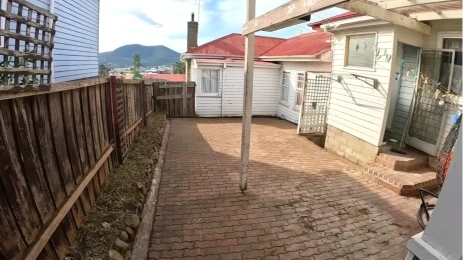
A side yard with a drainage strip is a good start for a dog run.
Pet-friendly yard FAQs
Want a yard your dog (and you) will love?
We’ll plan shade, surfaces and plantings that are safe for pets and easy to keep clean. Free, written estimate.
Las Cruces Landscaping Group
1921 Santa Ines Drive, Las Cruces, NM 88011
(575) 270-0676. Mon to Sat, 7 a.m. to 7 p.m.
Request a Free Estimate
Takes under a minute. We’ll call you back today.