Las Cruces Yard Guide
Monsoon Yard Prep Checklist for Las Cruces
Las Cruces can go months without real rain, then get a year’s worth of trouble in one July afternoon. Monsoon storms bring sudden downpours, wind and hail, and the yards that suffer are the ones where nobody decided where the water should go. Here’s what to check before the season and after each storm.
Updated September 2026 using National Weather Service and City of Las Cruces guidance.
Quick answer
How do I prepare my yard for monsoon season?
Before mid-June, make sure the ground slopes away from your house, clear gutters, downspouts and drains, give runoff a path to follow, trim dead or heavy tree limbs and set irrigation to skip after rain. After each big storm, fix washouts and pull weeds before they seed.
The National Weather Service defines monsoon season in our region as June 15 through September 30. The City of Las Cruces notes that flood warning time here averages about 20 minutes, so prep has to happen before the clouds build.
Monsoon calendar
|
When |
What to do |
|---|---|
|
May to early June |
Grading, drains, gutters, tree trimming |
|
June 15 |
Monsoon season officially starts |
|
After each big storm |
Walk the yard, fix washouts |
|
July to August |
Weeds and goatheads surge |
|
October |
Refresh rock, plan drainage fixes |
Season dates: National Weather Service El Paso/Santa Teresa.
Before the season
What should be on a pre-monsoon checklist in Las Cruces?
In May or early June, check that soil slopes away from the foundation, clean gutters, downspouts, scuppers and drains, open swales and dry creek beds, top up rock where it washed thin, trim dead or top-heavy tree limbs and set a rain delay or smart controller.
1
Check the grade
Soil and rock should slope away from the house for the first several feet. Low spots next to the foundation are where water collects.
2
Clear gutters and canales
Clean out leaves and debris, and extend downspouts so water lands well away from the wall.
3
Open up drains and culverts
Clear yard drains, wall scuppers and driveway culverts of rock, sand and tumbleweeds.
4
Give runoff a path
Decide where water goes: a swale, dry creek bed, French drain or planting basin.
5
Trim trees
Remove dead limbs and thin heavy canopies on mesquite, palo verde and other fast growers before wind storms.
6
Tie down and put away
Secure shade sails, patio umbrellas, trampolines and loose items the wind can throw.
7
Set irrigation to skip rain
Use the controller’s rain delay or a smart controller so you aren’t watering soaked ground.
8
Review flood insurance
Most homeowners policies don’t cover flood, and a new flood policy usually takes 30 days to start.
Drainage
Where does monsoon water cause trouble, and how do you fix it?
Monsoon water causes trouble against foundations, in low spots that pond, on slopes that wash out rock, and where downspouts dump onto bare soil. Fix it with regrading, splash pads and downspout extensions, swales or dry creek beds, and French drains for spots that stay soggy.
|
What you see |
Why it happens |
Fix |
|---|---|---|
|
Water pooling by the house |
Soil or rock slopes toward the wall |
Regrade to slope away; extend downspouts |
|
Rock washed onto the sidewalk |
Water runs across beds with no path |
Dry creek bed or swale; larger rock in flow lines |
|
Ruts and erosion on slopes |
Runoff speeds up on bare soil |
Terracing, retaining walls, rock rip-rap |
|
Caliche or compacted soil won’t drain |
French drain or drywell |
|
|
Neighbor’s runoff in your yard |
Shared grade between lots |
Berm or swale to redirect it |
|
Muddy side yard |
No grade, no rock, heavy foot traffic |
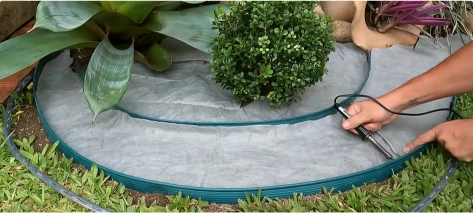
Grade, weed barrier and rock or pavers |
Harvest it
New Mexico allows homeowners to collect rooftop runoff for use on their own property. Rain barrels and planting basins turn a problem into free water for trees.
Keep drains clear
The City warns that yard waste and debris in storm drains cause water to back up. Report blocked City drains at 575-528-3131.
Bigger regrading
Major regrading or floodwalls can need a City permit, especially in a flood hazard area. We can help you figure out what applies.
After the storm
What should you do after a big monsoon storm?
After a big storm, walk the yard for washouts and exposed drip tubing, check for standing water near the house, delay irrigation until the soil dries, clear drains again, rake rock back into beds, pull weeds and goatheads while the soil is soft, and check trees for split limbs.
Weeds explode after monsoon rain. Our goathead guide covers how to get ahead of them. Put storm debris out for the City’s grappler service, not in the street or drains.
Related services
Monsoon yard FAQs
Worried about the next big storm?
We regrade yards, install French drains, dry creek beds and retaining walls, and clean up after storms. Free, written estimate.
Las Cruces Landscaping Group
1921 Santa Ines Drive, Las Cruces, NM 88011
(575) 270-0676. Mon to Sat, 7 a.m. to 7 p.m.
Request a Free Estimate
Takes under a minute. We’ll call you back today.